A surveillance camera is only as useful as the view it provides. Installing several cameras does not automatically mean that a property has better security. If an entrance remains outside the camera’s field of view or poor lighting affects nighttime footage, an expensive system may still leave important gaps.
This is why Surveillance Camera Installation in Noida deserves careful planning. Homes, offices, retail outlets, warehouses, and commercial buildings all have different layouts and security priorities. The right approach begins with understanding the property rather than choosing equipment first.
Start With the Areas That Matter
Every property has locations where monitoring can provide greater value. Entrances, gates, parking areas, reception zones, storage rooms, and service passages are common examples.
However, the most important areas can differ considerably.
A residential property may focus on the main gate and driveway. A retail shop might need clearer visibility around customer entrances and stock areas. A warehouse could require attention around loading points and storage sections.
Look for Security Gaps
Walking through the property can reveal areas that are difficult to observe naturally. A side entrance hidden from reception or a poorly visible parking corner may become a priority for camera coverage.
This simple assessment can prevent the common mistake of placing cameras only where they are easiest to install.
Camera Placement Is a Practical Decision
The position of a camera affects what it can actually capture. Height, distance, viewing angle, surrounding structures, and expected movement all influence the final result.
For example, a camera above an entrance should ideally provide a useful view of people approaching the doorway. If it is positioned too high or at an unsuitable angle, important visual details may be harder to identify.
Consider Movement Patterns
People do not always stand still when entering a property. Visitors may approach from different directions. Vehicles may turn through a gate. Employees may use a separate access point.
Understanding these patterns helps determine where cameras should face and how much area each viewpoint needs to cover.
Lighting Can Change the Quality of Footage
A location may look completely different during the day and at night. Direct sunlight, shadows, headlights, reflective surfaces, and artificial lighting can all influence image quality.
This becomes especially important for outdoor installations.
Imagine a camera facing an entrance where afternoon sunlight falls directly behind visitors. The resulting image may be less useful than expected. Changing the viewing direction or selecting equipment suited to the lighting conditions can make a meaningful difference.
Nighttime Visibility Matters
A security system should not be evaluated only under daylight conditions. Areas that require monitoring after dark should be considered separately.
Low-light performance, infrared capability, surrounding illumination, and camera placement can all influence nighttime results.
Different Properties Need Different Approaches
There is no universal camera arrangement that suits every building.
Residential Properties
Homes generally require practical monitoring around gates, doors, driveways, parking areas, and selected outdoor spaces. The system should provide useful visibility without becoming unnecessarily complicated.
Offices
Office environments can have public and restricted areas. Reception desks, employee entrances, corridors, parking zones, and sensitive rooms may have different monitoring requirements.
Commercial and Retail Spaces
Retail properties often experience continuous customer movement. Camera placement can focus on entrances, sales areas, stockrooms, and other operational locations depending on the layout.
Warehouses
Large storage facilities present different challenges. High ceilings, long aisles, loading zones, and large open spaces can make camera positioning more important than simply increasing camera quantity.
Recording and Storage Deserve Attention
Capturing footage is only part of a surveillance system. That footage also needs to be recorded and stored appropriately.
Storage requirements depend on several factors. These include the number of cameras, recording resolution, recording schedule, and the length of time footage needs to remain available.
A small home system may require modest storage. A commercial property with many cameras can have considerably greater requirements.
What happens when footage is needed several days after an incident? A suitable recording and storage plan can make reviewing past events considerably easier.
Installation Quality Affects Long-Term Performance
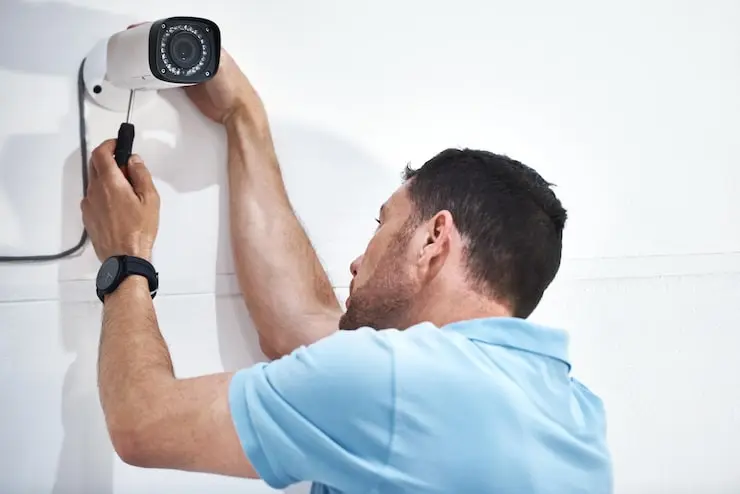
Good equipment can still produce poor results if installation is handled carelessly. Cameras should be securely mounted. Connections need to be checked. Cables should be routed in a way that reduces unnecessary exposure and makes future servicing easier.
The installation should also consider power availability and the physical structure of the property.
A clean setup is not simply about appearance. Proper installation can make troubleshooting, upgrades, and maintenance more manageable over time.
When Should an Existing System Be Reviewed?
A surveillance system can become less suitable as a property changes.
A new entrance may be added. A parking area may be redesigned. A business may expand into another section of the building. Existing cameras may also develop blind spots because of construction or changes in the surrounding environment.
Signs of an Outdated Setup
A review may be worthwhile when:
- Important areas remain outside camera coverage.
- Existing footage lacks useful detail.
- Nighttime visibility is poor.
- Cameras have shifted from their intended angles.
- Recording problems occur frequently.
- The property’s layout has changed significantly.
In some cases, targeted improvements may be enough. A complete replacement is not always necessary.
Making the System Future-Ready
Security requirements can change as properties grow. Planning with future expansion in mind can make later upgrades easier.
For example, a business may initially monitor one floor but later add another operational area. A flexible installation can make additional coverage easier to incorporate without redesigning the entire system.
The goal is not to predict every future change. It is to avoid creating unnecessary limitations today.
Frequently Asked Questions
1. What is Surveillance Camera Installation?
It involves planning, mounting, connecting, configuring, and testing surveillance cameras according to a property’s monitoring requirements.
2. Where should cameras usually be placed?
Common locations include entrances, gates, parking areas, corridors, reception areas, storage spaces, and other important monitoring points.
3. Does camera position affect image quality?
Yes. Height, viewing angle, distance, lighting, and surrounding obstacles can significantly influence the usefulness of captured footage.
4. Are outdoor cameras different from indoor cameras?
They can be. Outdoor locations may require equipment designed for exposure to weather, dust, temperature changes, and other environmental conditions.
5. How important is nighttime performance?
It can be extremely important for properties that require monitoring after dark. Suitable low-light capabilities and proper positioning can improve nighttime visibility.
6. Can an existing surveillance system be upgraded?
Depending on compatibility, additional cameras, storage, or other components may be added or replaced to address changing requirements.
Conclusion
Good surveillance is ultimately about useful visibility. A camera should serve a clear purpose, cover a meaningful area, and continue performing reliably as the property changes. For homes and businesses considering Surveillance Camera Installation in Noida, taking time to assess coverage, lighting, placement, recording, and future requirements can lead to a more practical security setup. The right system is not necessarily the biggest one. It is the one that fits the property and its real-world needs. For readers researching surveillance installation and related security options in Noida, the Baba Smart IT Solution website can be a useful place to explore further information.