A security camera does not prevent every incident. What it can do is create visibility where there may otherwise be none. For homeowners and businesses in Noida, that visibility can make it easier to monitor entrances, observe daily activity, review unexpected events, and maintain greater awareness of the property.
Choosing Surveillance Camera Installation in Noida should therefore involve more than selecting cameras from a product catalogue. The property’s layout, lighting, security priorities, recording requirements, and future needs all deserve attention before installation begins.
Start With a Security Assessment
Every property tells a different security story. A compact apartment has different requirements from a multi-floor office or an industrial warehouse.
Identify Areas That Matter
The main entrance is usually an important monitoring point. Gates, parking areas, reception desks, corridors, stockrooms, loading zones, and restricted-access areas may also deserve coverage.
The objective is not to place cameras everywhere. It is to make sure the areas that matter most are visible.
For instance, a warehouse might have excellent coverage across its storage racks but no useful view of the loading entrance. A small change in camera positioning could make that system considerably more practical.
Camera Selection Should Match the Environment
The location determines what type of camera makes sense. Indoor areas may require compact cameras with suitable viewing angles. Outdoor spaces can demand weather-resistant equipment and stronger protection against environmental conditions.
Think About Lighting
Lighting is one of the easiest factors to overlook. A camera facing a bright window may struggle to capture useful details inside a room. Outdoor cameras can face a similar challenge when sunlight changes throughout the day.
Night-time conditions require equal attention. Cameras with infrared or low-light capabilities can help maintain visibility when natural light is limited.
Wired or Network-Based Systems?
The property’s infrastructure can influence the installation approach. Traditional wired systems can provide stable connections between cameras and recording equipment. Network-based cameras can offer additional flexibility and integration possibilities.
Consider Future Expansion
A business may start with six cameras and eventually require twelve. If the initial system has been planned without expansion in mind, upgrading can become more complicated.
A forward-thinking installation considers available network capacity, recording requirements, power arrangements, and suitable locations for future cameras.
Recording Is Just as Important as Viewing
Live video is useful, but recorded footage is often what matters after an incident. Storage should therefore be planned according to the number of cameras, image quality, recording schedule, and desired retention period.
A small office may only need moderate storage. A busy retail location with continuous activity can require significantly more.
Motion-based recording may reduce unnecessary storage consumption in certain situations. However, the appropriate recording method depends on the property’s monitoring objectives.
Remote Monitoring for Modern Businesses
Today’s surveillance systems can provide remote access when compatible equipment and network connectivity are available. Authorized users may be able to view selected cameras while away from the property.
Imagine a manager travelling outside Noida who needs to check activity at a warehouse entrance. Remote monitoring can provide that visibility without requiring an immediate physical visit.
However, remote access should be configured responsibly. Strong passwords, controlled permissions, secure network practices, and regular system checks remain essential.
Installation Quality Affects Performance
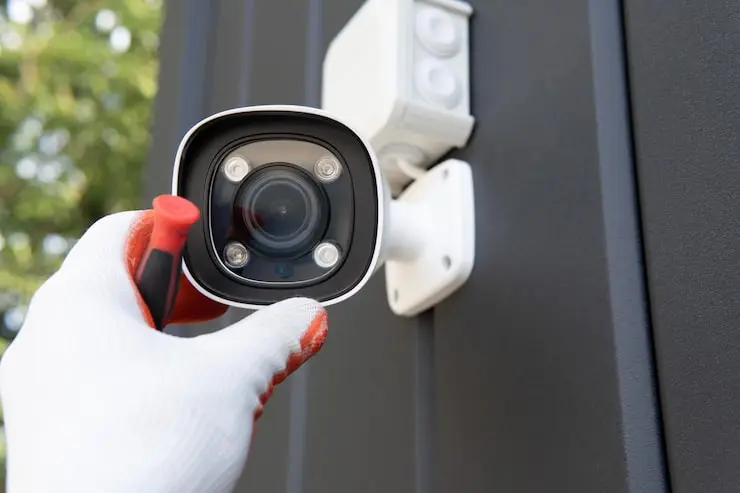
Even excellent equipment can deliver disappointing results when installation is poorly executed. Camera alignment, mounting stability, cable routing, power connections, and recorder configuration all contribute to system reliability.
Keep the Installation Maintainable
A neat installation is not only about appearance. Accessible and properly organized connections can make troubleshooting easier when a camera requires attention.
Testing should also cover daytime and nighttime conditions where relevant. The final system should be checked from the perspective of actual users rather than simply confirming that every camera displays an image.
Where Surveillance Cameras Can Help
Security Camera Installation can support homes, retail stores, offices, warehouses, educational facilities, clinics, and commercial buildings.
A retail store, for example, may use cameras to monitor entrances and checkout areas. A warehouse can focus on loading docks and inventory zones. An office may prioritize reception and restricted-access areas.
One useful principle applies across these environments: coverage should follow risk and activity rather than simply the size of the property.
Frequently Asked Questions
1. What does Surveillance Camera Installation in Noida include?
It may include site assessment, camera selection, mounting, cabling, recording setup, connectivity, configuration, testing, and basic user guidance.
2. How many cameras are required for a property?
The number depends on the property’s layout, entrances, important areas, camera viewing angles, and required level of coverage.
3. Can surveillance cameras work in low light?
Many models support infrared or low-light technologies. Actual performance depends on the camera specification and surrounding conditions.
4. Is remote viewing available with modern CCTV systems?
Compatible surveillance systems can support remote viewing when properly connected and configured with authorized access.
5. Are outdoor cameras different from indoor cameras?
Often, yes. Outdoor cameras may require stronger weather protection and features designed for changing environmental and lighting conditions.
6. How can CCTV footage be stored?
Footage may be stored using dedicated recording equipment or network-based storage depending on the system design. Required capacity depends on camera count, resolution, and retention period.
Conclusion
The role of surveillance is gradually shifting from simple video recording toward smarter property awareness. As Noida continues to develop across residential, retail, corporate, and industrial sectors, businesses can benefit from security systems designed around changing operational realities. A thoughtful Surveillance Camera Installation in Noida can become more than a collection of cameras. With the right planning, Security Camera Installation can support a property’s broader approach to visibility and monitoring. Baba Smart IT Solutions can be considered for businesses and property owners seeking practical surveillance solutions tailored to their premises.